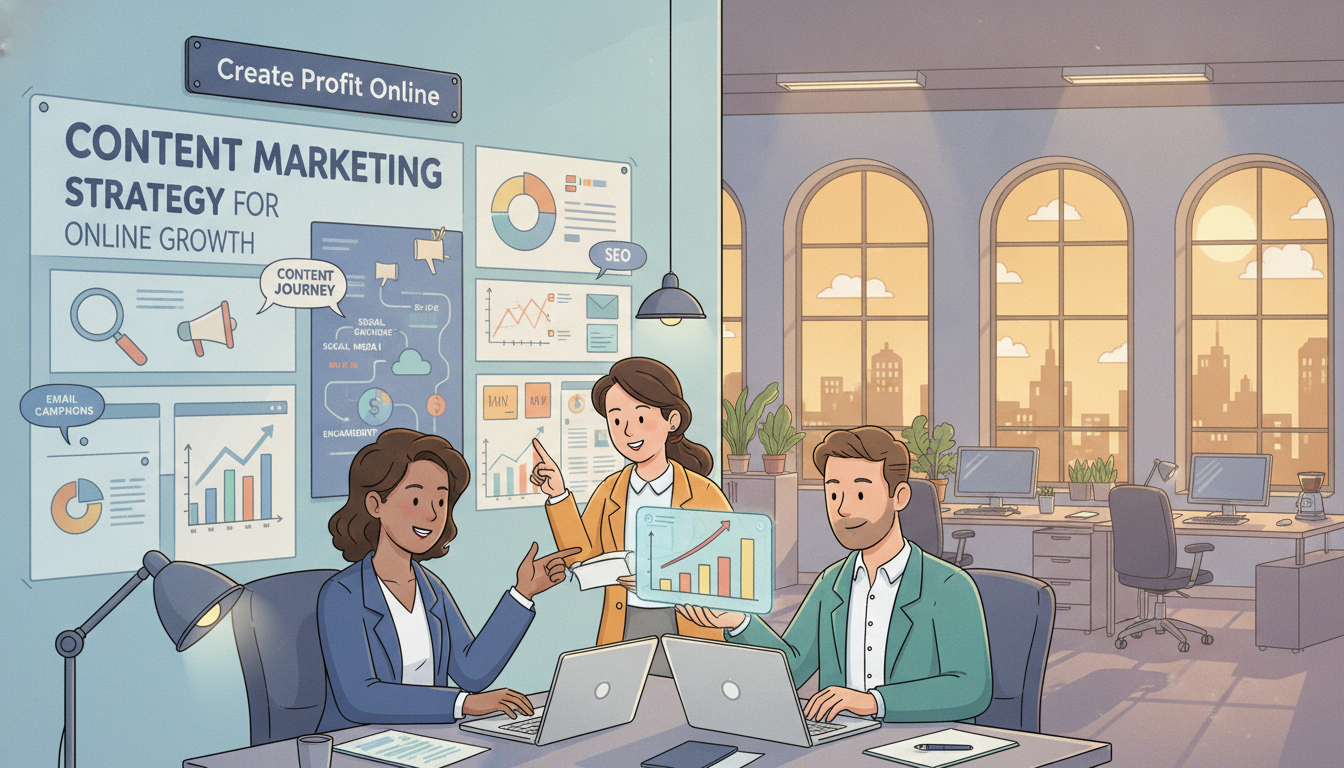
Content Marketing Strategy for Online Growth
Did you know that 86% of decision-makers worldwide plan to either maintain or increase their content marketing budgets in early 2024? This statistic highlights the undeniable importance of effective online presence for businesses today.
I believe that a robust approach to engaging your audience is essential for achieving sustainable growth. By focusing on creating valuable and relevant material, you can organically attract customers instead of relying on costly advertising methods.
This guide aims to help you understand how to transform your marketing efforts into a reliable engine for success. I have witnessed firsthand how a well-executed plan can build trust and authority in a crowded digital landscape.
Let’s explore the essential steps needed to develop a plan that aligns with your specific business goals and propels you toward growth.
Key Takeaways
- A strong approach is vital for online growth.
- Investing in quality material is essential for staying competitive.
- Building trust is crucial in a crowded market.
- Organic attraction of customers can reduce advertising costs.
- Aligning efforts with business goals is key to success.
Introduction: My Journey with Content Marketing
The effectiveness of traditional ads is waning. I realized that my business needed a fresh approach to connect with customers. This led me to prioritize long-term efforts that focus on engaging my audience through valuable insights.
Choosing a new path was not easy. However, I found that investing in a content marketing approach was both scalable and cost-effective. It allowed me to reach customers organically, building a loyal audience that values my insights.
By sharing helpful information consistently, I transformed my business into a thought leader in my niche. I learned that online growth goes beyond just traffic; it’s about creating meaningful connections that drive conversions.
When you invest in your own material, you own valuable assets that can generate leads over time. This journey has taught me the importance of embracing innovative methods to foster growth.
Understanding the Power of Content Marketing
In an era of information overload, standing out requires a fresh approach. Traditional advertising often pushes a message, while content marketing pulls customers in by offering something genuinely useful and relevant. This shift is essential for modern businesses.
In early 2024, 86% of decision-makers recognized the importance of content-driven approaches. They see it as a necessary evolution for their overall marketing efforts. Today’s consumers are tired of hard sells; they prefer brands that educate and solve their specific problems.
By moving away from solely paid models, businesses can build long-term trust that traditional ads simply cannot replicate. Content marketing provides value to customers, laying the foundation for a sustainable and profitable brand. I’ve seen firsthand that once you stop paying for ads, the traffic stops. However, high-quality content continues to work for you indefinitely.
Building a Solid content marketing strategy
Creating a robust plan is essential for effective online growth. A well-defined approach aligns your creative output with your business goals. This ensures that every piece of material you produce serves a purpose.
According to Mike Volpe, the former CMO of HubSpot, building brand awareness starts with creating content that generates quality leads over time. I recommend structuring your team to scale with your company. This could mean starting with a full-funnel marketer and eventually developing a dedicated content organization.
A documented content marketing strategy is crucial. It streamlines your creation process and secures buy-in from senior leadership. Your strategy should be a well-defined roadmap, guiding every piece of material you produce.
Having a dedicated team allows you to bifurcate responsibilities, which is vital for scaling your efforts. This structured approach will help you achieve your business objectives more effectively.
Defining Your Target Audience
Understanding who your audience is can significantly enhance your outreach efforts. To truly connect with your target audience, you need to go beyond basic demographics. It’s vital to grasp their deeper beliefs, values, fears, and aspirations.
I recommend utilizing the Semrush One2Target tool. This tool provides valuable data on your audience’s age, gender, income level, and online behavior patterns. By gathering this information, you can create detailed buyer personas.
These personas help tailor your tone and language, ensuring your message resonates with the people you want to reach. Never rely on guesswork; use surveys and interviews to uncover the biggest pain points your customers face.
Leveraging audience insights also guides you in choosing the best social media platforms for sharing your material. Understanding where your audience spends their time online is crucial for maximizing your overall reach.
Exploring Essential Content Types
Exploring various types of media can significantly boost your outreach efforts. Each format has unique strengths that can engage your audience in different ways.
Blog posts remain the cornerstone of your approach. Websites with active blogs have 434% more indexed pages and 97% more inbound links. This makes them essential for driving organic traffic.
Video content is also vital. In fact, 91% of marketers use it as a key tool to enhance user understanding of their products. As we look ahead, podcasting is growing rapidly, with nearly 505 million listeners projected in 2024.
Infographics serve as powerful visual tools. Content that includes images can see up to 650% higher engagement compared to text-only posts. Moreover, email marketing boasts an impressive average return on investment of $36 for every dollar spent.
Lastly, white papers are essential for B2B success, with 67% of successful businesses incorporating them into their overall plans.
| Content Type | Key Statistic | Importance |
|---|---|---|
| Blog Posts | 434% more indexed pages | Boosts SEO |
| Video | 91% of marketers use it | Enhances product understanding |
| Podcasting | 505 million listeners by 2024 | Convenient audience reach |
| Infographics | 650% higher engagement | Visual appeal |
| Email Marketing | $36 ROI per dollar spent | Cost-effective |
| White Papers | 67% of successful businesses use them | B2B essential |
Leveraging Social Media and Email Channels
Harnessing the potential of social media and email can significantly enhance your outreach. In fact, 76.1% of internet users rely on these platforms for brand or product research. This statistic underscores the importance of a strong online presence.
When using social media, it’s crucial to tailor your content to fit the unique style of each platform. Whether it’s LinkedIn, Facebook, or Instagram, adapting your message helps you connect better with your audience.
Email also plays a vital role. It provides a direct line of communication with your customers, allowing you to nurture leads through personalized and relevant messaging. Segmenting your audience based on their behavior ensures your emails are always impactful.
Utilizing social media for real-time engagement, like polls and live videos, can build stronger relationships with your followers. By combining social media and email, you create multiple touchpoints that keep your brand top-of-mind for your target audience.
Developing a Robust Content Calendar
Creating a well-structured calendar is vital for maintaining an effective online presence. It serves as a roadmap for your upcoming posts, ensuring that your team can coordinate efforts seamlessly. This planning document helps you execute your approach with maximum efficiency and consistency.
I recommend using tools like Google Sheets, Trello, or Asana to track all relevant details of your posts. This includes titles, deadlines, and assigned team members. A calendar not only helps your team stay organized but also ensures consistency in publishing, which is essential for building trust with your audience.
Defining clear roles and responsibilities for each team member is crucial. When everyone knows their tasks and deadlines, the process runs smoothly. Additionally, planning your posts in advance allows you to stay on track with your goals and prepare for busy periods throughout the year.
From my experience, a well-maintained calendar prevents haphazard efforts and keeps your overall approach focused on long-term growth.
| Feature | Benefit | Tool Suggestions |
|---|---|---|
| Coordination | Streamlines team efforts | Google Sheets, Trello |
| Consistency | Builds audience trust | Asana, Notion |
| Role Clarity | Enhances productivity | Monday.com, ClickUp |
| Planning Ahead | Prepares for busy times | Excel, Airtable |
| Long-term Focus | Supports sustainable growth | Smartsheet, Wrike |
Creating High-Quality, Engaging Content
Creating compelling material is more important than ever in today’s digital landscape. Producing high-quality content is increasingly challenging. However, Matt Diggity, CEO of Diggity Marketing, demonstrated that focusing on quality can lead to remarkable results. He reported a 527% increase in website visitors by prioritizing fewer, high-quality pieces over sheer volume.
To keep your audience engaged, use storytelling techniques and incorporate visuals. This approach helps your work resonate with the people who read it. I believe that creating high-quality content requires a dual-minded approach. You need to be both highly creative and data-driven in your decision-making.
Consistency is key to building trust. Ensure your content creation process is sustainable and aligns with your mission. Collaborating with designers and industry experts can help produce relevant material that meets your audience’s needs.
Finally, I advise prioritizing a smaller number of excellent pieces. They will likely drive better results than many thin, low-quality posts.
Optimizing Content Distribution and Promotion
Maximizing your visibility online requires a thoughtful approach to how you share your work. Your distribution plan should include a mix of organic search engine optimization and paid advertising to boost your overall visibility.
If you have the budget, I recommend using Google Ads or Meta advertising solutions to reach new audiences quickly and effectively. This approach can provide immediate traffic and enhance your brand’s recognition.
Additionally, consider content syndication on third-party sites like Medium. This strategy helps tap into new audiences who may not yet know your brand.
Don’t forget to optimize your material for search engines. Doing so can help it rank higher, providing a cost-effective source of long-term traffic.
My approach also includes using influencer marketing. Partnering with well-known bloggers allows them to share your work with their dedicated followers.
Remember, you don’t need to be everywhere. Focus your distribution on channels where you can be consistent and provide depth.

Measuring Performance and Key Metrics
Measuring the success of your efforts is crucial for achieving your business goals. Understanding the right metrics can help you assess how well your initiatives are performing. By focusing on key performance indicators (KPIs), you can gain valuable insights into your effectiveness.
Here are some essential KPIs to track:
- Website Traffic: This indicates how many visitors engage with your site.
- Lead Generation: Measure how many leads are produced from your efforts.
- Conversion Rates: Track the percentage of visitors who take desired actions.
Utilizing tools like Google Analytics allows you to monitor traffic data effectively. It’s the most widely used tool for this purpose. Additionally, the Semrush Position Tracking tool helps you keep an eye on keyword rankings, enabling adjustments to your approach as needed.
Regularly reviewing your performance data is essential. It helps identify what works well and what requires improvement. My approach emphasizes using data to make informed decisions about resource allocation for the best return on investment (ROI).
Finally, monthly reporting ensures you stay ahead of any plateaus, keeping your initiatives aligned with your evolving business objectives.
Overcoming Common Content Marketing Challenges
Navigating the world of online engagement can be tricky. Many face hurdles in maintaining consistency and measuring success. However, with the right approach, these challenges can be tackled effectively.
One key area is understanding how to measure the return on investment (ROI) of your efforts. Tracking leads and conversion rates is essential. This helps you assess how effective your initiatives are in driving sales.
Additionally, I recommend using analytics tools to gather valuable data. Regularly reviewing your metrics will empower you to make informed decisions about your future goals.
Staying consistent in a dynamic landscape can be challenging. A well-planned content calendar helps you maintain a steady flow of material, ensuring you stay on track.
Focusing on producing content that addresses your audience’s specific needs is crucial. This can help you overcome the difficulty of creating truly engaging material.
My experience shows that you can maximize ROI by emphasizing long-term strategies, like brand building, rather than seeking immediate gratification. If you encounter obstacles, be prepared to adjust your approach based on your findings. This ensures you stay aligned with your business objectives.
Repurposing and Sustaining Your Content
Repurposing your work can breathe new life into your existing material. This approach is a smart way to extend the lifespan of your efforts. For instance, turning blog posts into videos or infographics can reach different audiences and maximize engagement.
I believe that focusing on evergreen topics is crucial. These subjects remain relevant over time, helping to sustain your online growth. Additionally, look for ways to create content that can be reused across multiple channels. This maximizes the value of your investment.
My approach involves taking a successful piece of long-form content and breaking it down into smaller social media posts. This strategy allows for wider reach and keeps your audience engaged.
By sustaining your content, you ensure that your brand remains visible even during periods when you cannot create new material. Remember, every piece you create should work for you indefinitely, providing value long after its publication.

Conclusion
Engaging your audience is key to lasting success. By implementing the insights shared, you can connect with your customers in meaningful ways. This connection builds trust and drives measurable results for your business.
Understanding the various types of material and crafting a strong approach will position your brand as a leader in your niche. I encourage you to start applying these steps today to witness the impact on your online traffic.
Remember, success stems from consistency, data-driven decisions, and a commitment to providing real value to your audience. You now possess the tools and knowledge to develop a marketing approach that fuels growth and attracts loyal customers.
FAQ
What is content marketing?
How can I define my target audience?
What types of content should I create?
How often should I post content?
What role does social media play in content marketing?
How can I measure the success of my content?
What are some common challenges in content marketing?
Can I repurpose my existing content?